
Here is how to memorize Ayatul Kursi in one sentence: learn it in small groups, recall each group before you look, and spread your reviews over days instead of cramming. Ayat al-Kursi is one long verse, al-Baqarah 2:255, so it rewards patience more than speed. Listen first, split it at its pause marks, recall then check, grade yourself honestly, and follow a 14-day review table. The table is a guide, not a guarantee, and none of it replaces reciting to a teacher.
Before you start: hear it right, and find someone to check you
Mistakes you repeat in the first few days tend to stick. So first, listen to the whole verse several times from a reciter your teacher or masjid trusts, following along in a printed Mushaf or on quran.com. If you are still learning Arabic, ask your teacher to hear your first group within a few days. A sound is far easier to fix on day two than on day twenty.
The verse's virtue is described in the hadith literature, for example in Sahih Muslim 810.
How to memorize Ayatul Kursi, phrase by phrase
Here is the verse as it appears in Rusukh's verified corpus, with its translation credit:
ٱللَّهُ لَآ إِلَٰهَ إِلَّا هُوَ ٱلْحَىُّ ٱلْقَيُّومُ ۚ لَا تَأْخُذُهُۥ سِنَةٌۭ وَلَا نَوْمٌۭ ۚ لَّهُۥ مَا فِى ٱلسَّمَٰوَٰتِ وَمَا فِى ٱلْأَرْضِ ۗ مَن ذَا ٱلَّذِى يَشْفَعُ عِندَهُۥٓ إِلَّا بِإِذْنِهِۦ ۚ يَعْلَمُ مَا بَيْنَ أَيْدِيهِمْ وَمَا خَلْفَهُمْ ۖ وَلَا يُحِيطُونَ بِشَىْءٍۢ مِّنْ عِلْمِهِۦٓ إِلَّا بِمَا شَآءَ ۚ وَسِعَ كُرْسِيُّهُ ٱلسَّمَٰوَٰتِ وَٱلْأَرْضَ ۖ وَلَا يَـُٔودُهُۥ حِفْظُهُمَا ۚ وَهُوَ ٱلْعَلِىُّ ٱلْعَظِيمُ
Allah! There is no deity save Him, the Alive, the Eternal. Neither slumber nor sleep overtaketh Him. Unto Him belongeth whatsoever is in the heavens and whatsoever is in the earth. Who is he that intercedeth with Him save by His leave? He knoweth that which is in front of them and that which is behind them, while they encompass nothing of His knowledge save what He will. His throne includeth the heavens and the earth, and He is never weary of preserving them. He is the Sublime, the Tremendous.
Pickthall translation, Qur'an 2:255 · read it on quran.com
Split the verse at its pause marks
The text above has eight pause marks, the small signs above the line, giving nine short segments. Group them into four study groups: segments 1–2, 3–4, 5–6 and 7–9. Mushafs printed in other styles may mark pauses differently, so follow your teacher's copy and split. Read the English alongside so each group carries a meaning.
Recall first, then check
Read a group three or four times while listening, then cover it and say it from memory. Only then look. Trying to pull the words out is itself practice: in a 2006 study by Roediger and Karpicke, students who practised recalling a passage remembered more of it a week later than students who re-read it. That study used prose passages, not the Qur'an, so take it as a general memory principle, not a hifz finding.
Grade yourself honestly and note where you stumble
Give each attempt an honest grade: forgot it, got it with effort, got it with a small hesitation, or got it easily. Note the exact place you faltered (a word, a join, a vowel you keep changing) and start your next session there.
Practise the joins
Most slips in a long ayah happen at the seams between groups. Once two groups are solid, recite them together as a separate exercise, then add the next. The table below has your first try at the whole verse on day 4; it doesn't need to be clean.
A 14-day review table (a guide, not a guarantee)
Spacing matters as much as repetition. A 2006 review by Cepeda and colleagues, covering 317 experiments, found that spaced study sessions generally beat massed ones, and that the best gap grows with how long you want to remember. So the table works daily while the verse is new, then widens the gaps.

| Day | New work | Review (recall first, then check) |
|---|---|---|
| 1 | Listen several times; learn A | A from memory three times, with breaks |
| 2 | Learn B | A alone, then A and B joined |
| 3 | Learn C | A and B, then A to C joined |
| 4 | Learn D | First try at the whole verse; mark every stumble |
| 5 | None | Whole verse morning and evening; drill marked spots |
| 6 | None | Whole verse once; drill the joins |
| 7 | Recite to your teacher | Fix their corrections, then one clean recall |
| 10 | None | Whole verse once |
| 14 | Recite to your teacher again | Whole verse once, then regular revision |
If a review goes badly, repeat the previous day. The aim is to still have the verse a year from now, not to finish in fourteen days. After day 14, keep it in your long-term revision, which hifz circles call manzil (see our sabaq, sabqi and manzil explainer).
Recite to a teacher or ustadh
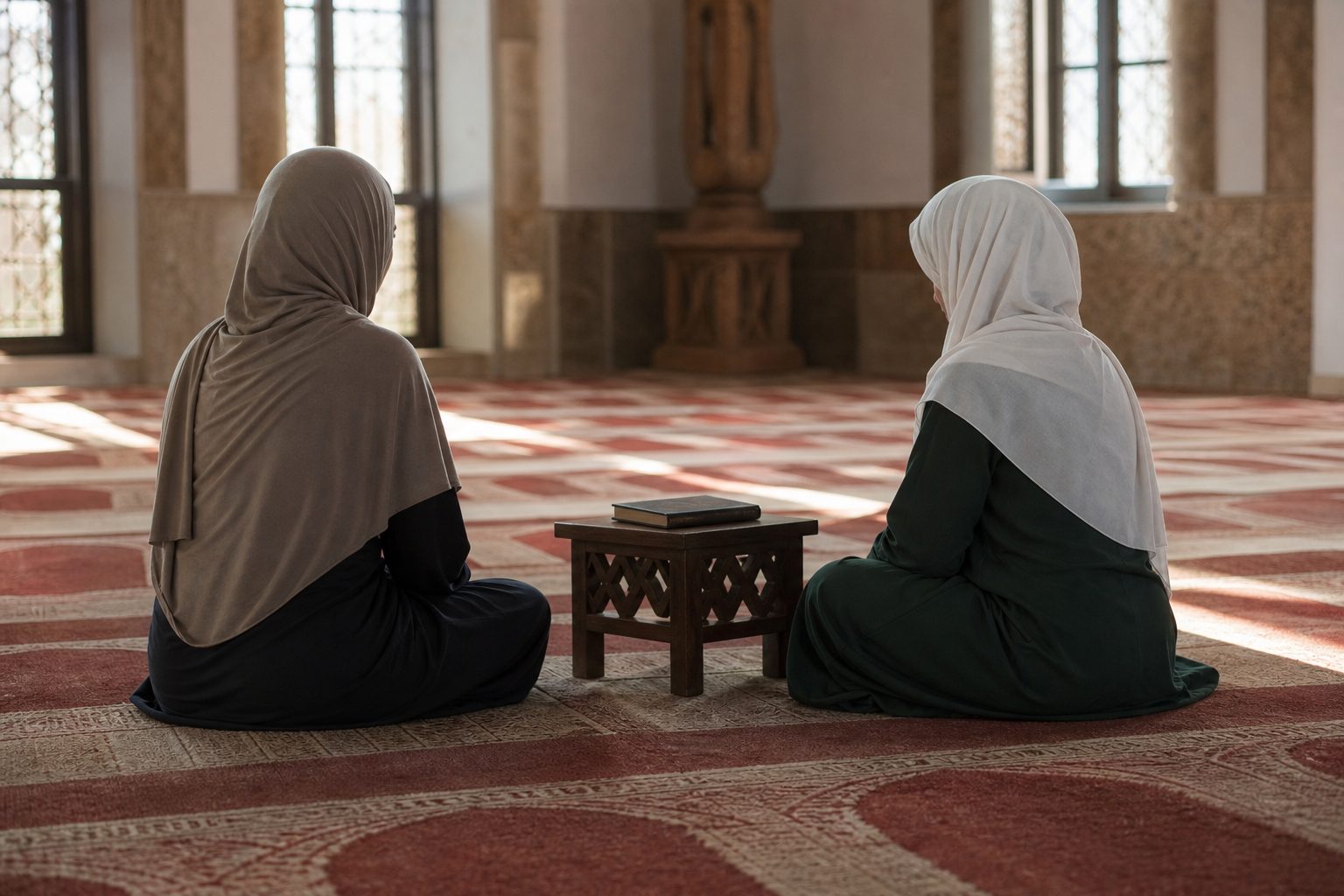
Checking yourself catches missing words. It won't reliably catch a wrong vowel, a letter from the wrong place, or a pause that breaks the meaning. A teacher, ustadh or ustadha who hears you will. Plan at least two recitations, around day 7 and near day 14. If you have no teacher, ask at your local masjid whether someone can listen.
A study aid, not a ruling
When to recite Ayat al-Kursi in worship is a question of fiqh, and scholars differ on some details. This is a study aid. For a personal ruling, consult a qualified scholar or your imam.
Doing it in Rusukh
Rusukh is a Qur'an study companion in private beta. Its verified offline corpus is the complete Qur'an, Ayat al-Kursi included, so the beta can run this plan.
- Find the verseIn Read, open Jump to and type 2:255. The reader scrolls to the verse and highlights it, with Pickthall's translation credited beneath.
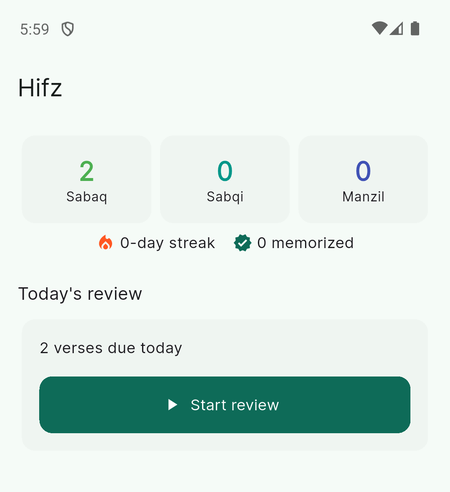
- Add it to HifzTap the verse and choose Add to Hifz. It starts as Sabaq, your new lesson, in the day's review.
- Recall, then RevealA review card shows only the reference until you tap Reveal 2:255. Then tap any word where you stumbled to log it, and grade Again, Hard, Good or Easy.
- Let the schedule space itAfter a passing grade it moves to Sabqi (recent revision) and comes up daily while good grades lengthen its interval. Past seven days it moves to Manzil and returns only when due. Again brings it back the next day.
- Watch Weak spotsThe Hifz home lists up to eight verses with the most logged stumbles. Progress saves on your device first, so reviews work offline.
What the beta doesn't do
Rusukh has no audio, so listen to a reciter elsewhere. It treats 2:255 as one review item, so the group work is yours. Weak spots counts stumbles per verse, not which words, so keep your notebook. It doesn't send review reminders.
Frequently asked questions
How long does it take to memorize Ayat al-Kursi?
There is no honest fixed number. It depends on whether you read Arabic, how familiar the verse already is, and how much time you give it. The 14-day table is a pacing guide, not a promise, and repeating days is normal.
Where is Ayat al-Kursi in the Qur'an?
It is verse 255 of Surah al-Baqarah, the Qur'an's second surah, written as Qur'an 2:255. You can read it with a translation at quran.com/2/255.
How do I memorize a long ayah without mixing up the parts?
Learn it in small groups that end at pause marks, recall each group before you check it, and practise the joins between groups as a separate step. Start each session where you last stumbled.
Can I learn Ayat al-Kursi from an app alone?
An app can schedule your reviews and log your stumbles, but it can't hear you recite. Rusukh has no audio and doesn't check recitation, so learn the pronunciation from a trusted reciter and recite to a teacher or ustadh.